How to Successfully Ask Dental Patients for Referrals
Posted on 6/3/2026 by WEO Media |
Get More Word-of-Mouth Without the Awkwardness
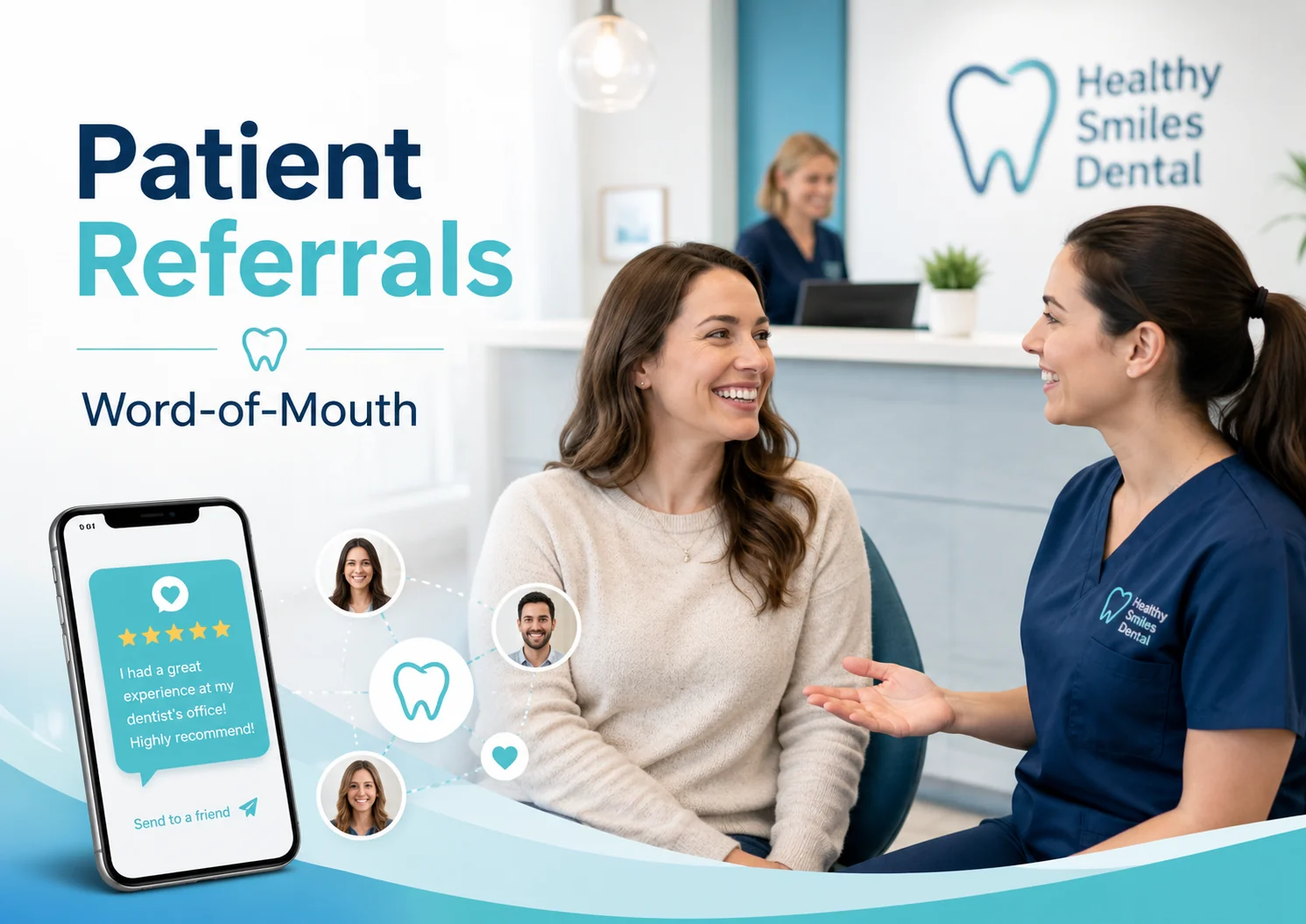 Asking dental patients for referrals is one of the most reliable ways for a dental practice to grow word-of-mouth, and it works best when the request feels natural and low-pressure—not awkward or salesy. Asking dental patients for referrals is one of the most reliable ways for a dental practice to grow word-of-mouth, and it works best when the request feels natural and low-pressure—not awkward or salesy.
Dental practices generate more referrals by timing the ask around genuine moments of satisfaction, training the whole team on a few simple scripts, and making it effortless for happy patients to share your name. This guide shows dental practices how to ask for referrals smoothly, who on the team should ask, what to say, and how to build a referral system that keeps producing without feeling pushy.
Here’s the core problem: most practices know referrals are their best new patients, but the ask feels uncomfortable, so it never happens consistently. The patient is delighted, the moment passes, and no one says anything. The fix isn’t a slicker sales line—it’s a small, repeatable habit your team feels good about, supported by a referral system that does the heavy lifting.
Referred patients often arrive already trusting your practice, schedule more readily, and tend to stay longer—though the exact lift varies by practice and market. Below, you’ll learn when to ask, who should ask, the words that feel natural, how to make referring effortless, where incentive programs get legally risky, and how to track what actually works.
Short on time? Jump to the scripts section for copy/paste language your team can use this week.
Written for: dental practice owners, office managers, hygienists, and front-desk teams who want more word-of-mouth referrals without awkward, salesy conversations.
TL;DR
If you only do five things, do these:
| 1. |
Ask at the moment of delight - request referrals right after a patient expresses satisfaction, not as a scripted checkout add-on
|
| 2. |
Make it a team habit, not a campaign - train hygienists, assistants, and front desk so the ask happens naturally and consistently
|
| 3. |
Use simple, low-pressure language - a short, sincere line beats a polished pitch every time
|
| 4. |
Remove every ounce of friction - hand them a card, a link, or a QR code so referring takes seconds
|
| 5. |
Check the rules before you incentivize - referral rewards can trigger state dental board and federal program restrictions, so verify before launching |
Table of Contents
Why dental patient referrals are your best new patients
Referrals are the closest thing dentistry has to pre-qualified growth. When a patient recommends you, they transfer their own credibility to your practice—the new patient arrives already trusting you, which shortens the path from first inquiry to booked appointment.
Compared with paid channels, word-of-mouth tends to produce patients who book more readily and stay loyal longer, because the relationship started with trust instead of a search result. Exact numbers vary by practice and market, so treat any single benchmark with caution—but the direction is consistent across the practices we work with.
What makes referrals different:
| • |
Built-in trust - the recommendation does the persuading before the patient ever calls
|
| • |
Lower acquisition cost - no per-click or per-impression spend to earn the introduction
|
| • |
Better fit - people tend to refer others similar to themselves, so referrals often match your ideal patient
|
| • |
Compounding effect - happy referred patients become referrers themselves |
When the math is worth it
Think in terms of habit, not hype. If a modest share of your satisfied patients each referred one friend or family member over a year, the cumulative effect compounds—new patients who go on to refer more patients. The point isn’t a precise multiplier; it’s that a small, consistent ask outperforms an occasional big push.
> Back to Table of Contents
When to ask for a referral
The single biggest lever in referral marketing isn’t the script—it’s the timing. Ask when the patient is feeling genuinely good about their experience, and the request feels like a natural extension of the moment. Ask at the wrong time, and even perfect wording lands as a sales push.
The best moments to ask:
| • |
Right after a compliment - when a patient says “that was so easy” or “I was nervous for nothing,” that’s your opening
|
| • |
After a comfortable procedure - relief and gratitude make people want to share
|
| • |
At a milestone - completing orthodontics, finishing implant treatment, or a child’s first cavity-free checkup
|
| • |
When they leave a positive review - a happy reviewer is already in a sharing mindset |
Moments to avoid:
| • |
Mid-treatment or during discomfort - never ask while a patient is anxious, numb, or in pain
|
| • |
During a billing question or dispute - financial friction is the wrong emotional backdrop
|
| • |
On a first visit before trust is built - give the relationship time before you ask |
The rule of thumb: ask when gratitude is in the room. If you have to manufacture the moment, wait for a better one.
> Back to Table of Contents
Who on your team should ask
Referrals shouldn’t depend on one person remembering to ask. The strongest programs spread the responsibility across the team so the request happens naturally wherever delight shows up—in the chair, at the desk, or in a follow-up message.
| • |
Hygienists and assistants - they spend the most one-on-one time with patients and hear the “that wasn’t bad at all” moments first
|
| • |
The dentist - a brief, sincere word from the provider carries unique weight, especially after a successful procedure
|
| • |
Front desk - the natural place to hand over a referral card or link at checkout, once a patient has expressed satisfaction
|
| • |
The whole team via follow-up - post-visit texts or emails can include a soft, optional referral prompt |
In our work with practices, the difference between an occasional referral and a steady stream usually comes down to whether everyone feels permission—and a little training—to ask. When only the owner cares about referrals, they stay rare. When the team owns it, they compound.
Give your team words and permission
Most team members hesitate not because they don’t want to help, but because they don’t know what to say and worry about sounding pushy. A short script and explicit permission to ask removes both barriers. Practice the language in a brief huddle until it feels like the team’s own voice, not a corporate line.
> Back to Table of Contents
Referral scripts that feel natural
The best referral scripts are short, specific, and sincere. They name the moment, make the ask once, and remove pressure by giving the patient an easy out. Avoid anything that sounds rehearsed or transactional.
Scripts for the clinical team:
| • |
After a compliment - “That means a lot. If you know anyone looking for a dentist, we’d love to take good care of them too.”
|
| • |
After a comfortable procedure - “I’m so glad that went smoothly. A lot of people put this off out of fear—if a friend or family member is nervous, feel free to send them our way.”
|
| • |
At a milestone - “Congratulations on finishing treatment. If anyone asks who did your smile, we’d be grateful for the introduction.” |
Scripts for the front desk:
| • |
At checkout - “Since you mentioned you had a great visit, here’s a card—feel free to pass it to anyone looking for a dentist.”
|
| • |
Handing over a link - “If you’d ever recommend us, this link makes it easy for a friend to book. No pressure at all.” |
A follow-up message template: For texts or emails after a visit, keep it brief and optional—“Thanks for visiting us! We’re so glad you had a good experience. If you know someone who’d be a great fit for our practice, here’s an easy link to share. Either way, we look forward to seeing you next time.”
Notice what these have in common: they reference a real moment, they ask once, and they always include a low-pressure release like “no pressure” or “feel free.” That release is what keeps the ask from feeling like a sale.
> Back to Table of Contents
Make referring effortless
Even a delighted patient won’t refer if it takes effort. Every extra step—remembering your name, finding your number, explaining how to book—loses referrals. Your job is to shrink the distance between “I’d recommend them” and “here, just go here.”
| • |
Physical referral cards - simple cards a patient can hand to a friend, with your name, location, and a way to book
|
| • |
A short, shareable link - a clean URL or booking link that’s easy to text or post
|
| • |
QR codes - on cards, at the front desk, or in follow-up emails so referring takes one scan
|
| • |
A dedicated referral page - a simple landing page that welcomes referred patients and makes scheduling obvious |
Pair the human ask with a frictionless path. The team member creates the moment and the trust; the card, link, or QR code captures it before it evaporates.
Don’t forget your online reviews
Public reviews are referrals at scale—a single review can influence many prospective patients searching for a dentist. The same delighted moment that earns a verbal referral is the ideal time to invite a review. Make that path equally effortless with a direct review link.
> Back to Table of Contents
Referral incentives and compliance
Many practices want to thank patients who refer—a gift card, a credit, a small giveaway. The instinct is good, but referral rewards in healthcare sit in a gray area that varies by state and by the programs your practice participates in. Before you launch any incentive, get the rules right.
Several considerations come into play. State dental boards and dental practice acts may limit or prohibit certain patient inducements. If your practice participates in Medicaid or other government health programs, federal rules—including anti-kickback and beneficiary inducement provisions—can restrict what you can offer for referrals. And rewards tied to specific treatment can raise additional concerns. None of this is legal advice; it’s a flag to check before you act.
| • |
Verify before you reward - confirm your plan with your state dental board and a healthcare attorney, especially if you bill any government program
|
| • |
Consider modest, non-escalating thank-yous - a simple gesture of gratitude is generally lower-risk than tiered cash incentives, but still confirm
|
| • |
Keep it patient-centered - the most durable referral engine is a great experience and an easy ask, not a payout
|
| • |
Document your policy - write down what you offer and why, so the whole team stays consistent and compliant |
The takeaway: a sincere ask and a frictionless path usually outperform incentives anyway—and they don’t carry the same legal exposure. If you do want to reward referrals, treat compliance as step one, not an afterthought.
> Back to Table of Contents
Handling awkward moments and objections
Even with great timing, some asks won’t land—and that’s fine. The goal is a comfortable interaction every time, whether or not a referral results. Here’s how to handle the moments that make teams nervous.
What if the patient says no or seems uninterested?
Accept it gracefully and move on: “Of course—no pressure at all. We’re just glad you’re happy.” A relaxed response protects the relationship and keeps the door open for later. Never follow up twice in the same visit.
What if it feels too salesy for our practice culture?
Reframe the ask as a service. You’re not selling—you’re giving a happy patient an easy way to help someone they care about find good care. When the language centers on the friend’s benefit, the discomfort usually fades for both the patient and your team.
What if we ask and nothing happens?
Referrals are a numbers-and-consistency game. Most asks won’t convert immediately, and that’s normal. The patients who say “sure” and do nothing today often refer someone months later because the seed was planted. Track the ask, not just the result, so the habit doesn’t depend on instant payoff.
> Back to Table of Contents
How to track referrals and measure results
If you don’t track referrals, you can’t tell whether your efforts are working—or reward the behavior you want more of. You don’t need complicated software; you need one consistent place to capture how each new patient heard about you.
| • |
Ask every new patient how they found you - capture “referred by a patient” as a distinct source at intake
|
| • |
Record the referring patient when possible - a name lets you say thank you and spot your top advocates
|
| • |
Use unique links or codes - shareable links and QR codes let you attribute referrals automatically
|
| • |
Review the numbers monthly - watch referral volume, conversion, and which team moments produce the most |
Close the loop with a thank-you
Whether or not you offer a formal reward, acknowledging a referral matters. A simple, sincere thank-you—a handwritten note or a warm mention at the next visit—reinforces the behavior and makes patients more likely to refer again. Just keep any tangible reward inside the compliance boundaries above.
Protect patient privacy
Referral tracking touches patient relationships, so handle it with care. Don’t ask patients to share others’ health information, and keep referral records limited to what you need—typically just the source and a name. When in doubt about privacy obligations, err toward collecting less.
> Back to Table of Contents
Work with WEO Media
A great referral program is part culture, part system—the human ask plus the digital path that captures it. WEO Media - Dental Marketing helps dental practices build the pieces that make referrals effortless: shareable referral pages, review-generation systems, and the online presence that turns word-of-mouth into booked appointments.
If you’d like help turning happy patients into a steady stream of new ones, contact WEO Media - Dental Marketing at 888-246-6906 or schedule a consultation to talk through a referral and reputation strategy built for your practice.
> Back to Table of Contents
FAQs
How do I ask a dental patient for a referral without being awkward?
The smoothest referrals come from timing, not technique. Ask right after a patient expresses satisfaction—“that was easier than I expected”—and keep it short and sincere: “If you know anyone looking for a dentist, we’d love to take care of them too.” Always add a low-pressure release like “no pressure at all” so the ask feels like an offer, not a sale.
When is the best time to ask patients for referrals?
Ask when gratitude is in the room: right after a compliment, following a comfortable procedure, or at a treatment milestone like finishing orthodontics. Avoid asking mid-treatment, during discomfort, in a billing dispute, or on a first visit before trust is established. If you have to manufacture the moment, wait for a more natural one.
Can I offer dental patients a reward for referrals?
Sometimes, but verify first. Referral rewards in healthcare can be restricted by state dental boards and dental practice acts, and federal rules can apply if you participate in Medicaid or other government programs. Confirm any incentive plan with your state board and a healthcare attorney before launching. Many practices find a sincere ask and an easy referral path work well without rewards.
Who on my dental team should ask for referrals?
Spread it across the team rather than relying on one person. Hygienists and assistants hear satisfaction first during one-on-one chair time, the dentist’s brief word carries weight after a procedure, and the front desk can hand over a card or link at checkout. Follow-up texts and emails can include a soft, optional prompt. When the whole team owns it, referrals become consistent.
What should I say when asking for a referral?
Keep it short, specific, and sincere. Reference the real moment, ask once, and include an easy out. For example: “I’m so glad that went smoothly—if a friend or family member is nervous about the dentist, feel free to send them our way.” The low-pressure release is what keeps the request from sounding like a pitch.
How do I track where my dental referrals come from?
You don’t need complex software. Ask every new patient how they found you and capture “referred by a patient” as a distinct source at intake. Record the referring patient’s name when possible so you can thank them, use unique links or QR codes for automatic attribution, and review the numbers monthly to see which moments produce the most referrals.
Are patient referrals better than paid advertising for dentists?
They serve different roles. Referrals tend to bring patients who arrive pre-trusting your practice, schedule readily, and stay longer, often at a lower acquisition cost than paid ads. Paid advertising reaches people who don’t know you yet and can scale quickly. The strongest practices use both—referrals for trusted, high-fit growth and paid channels for reach. Results vary by practice and market.
What is the difference between a referral and an online review?
A referral is a private, one-to-one recommendation to a specific person; an online review is a public recommendation that can influence many prospective patients at once. The same moment of patient delight is ideal for both. When a patient is happy, invite the review and make the verbal referral—then give them an effortless link for each. |
|