Organic vs. Paid Social Media for Dental Practices: How to Build a Strategy That Converts
Posted on 4/7/2026 by WEO Media |
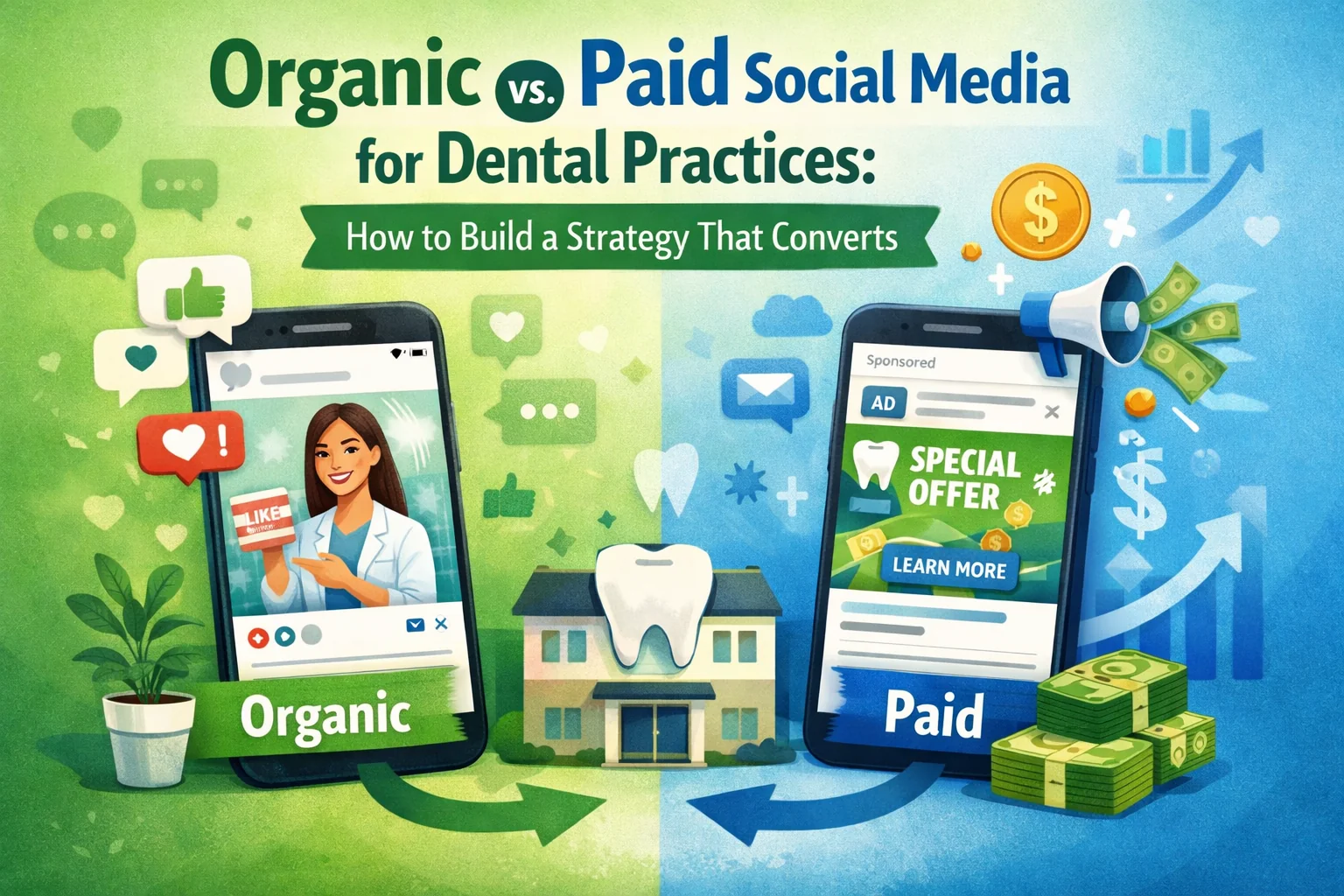 Dental practices that want to build a social media strategy that actually converts need both organic and paid approaches working together—organic content builds the trust and credibility that prospective patients look for, while paid campaigns on Facebook and Instagram deliver the targeted local reach needed to generate new patient inquiries at scale. The right mix between the two depends on your practice’s growth stage, budget, and goals, but the principle holds across every practice size: neither channel works as well without the other. Dental practices that want to build a social media strategy that actually converts need both organic and paid approaches working together—organic content builds the trust and credibility that prospective patients look for, while paid campaigns on Facebook and Instagram deliver the targeted local reach needed to generate new patient inquiries at scale. The right mix between the two depends on your practice’s growth stage, budget, and goals, but the principle holds across every practice size: neither channel works as well without the other.
The shift is real: organic reach on Facebook now averages between 1% and 3% for business pages, and Instagram organic reach has declined significantly year over year. A dental practice with 5,000 Facebook followers can expect fewer than 150 people to see any given organic post. That doesn’t mean organic content is wasted—it means organic content alone is no longer a patient acquisition strategy. It’s a credibility strategy that needs paid support to drive volume.
This guide walks through what each channel actually does for dental practices, how to allocate budget between them, how to build a combined social media strategy that converts, and how to measure whether your social media investment is working. Whether you’re spending nothing on social media right now or running paid campaigns that aren’t converting, the framework below will help you build a system that produces results.
Written for: dental practice owners, office managers, and marketing teams who want to understand how organic and paid social media work together to attract and retain patients.
TL;DR
If you only remember five things, remember these:
| • |
Organic social media builds trust, not volume - it keeps your practice visible to current patients and validates your credibility when prospective patients research you before booking
|
| • |
Paid social media drives patient acquisition - Facebook and Instagram ads let you target by location, age, and interest to reach people who haven’t found your practice yet
|
| • |
Organic reach has declined sharply - Facebook business page posts now reach 1–3% of followers on average, making paid support essential for visibility
|
| • |
Start with organic, scale with paid - build a consistent content foundation first, then use paid campaigns to amplify what’s already working and generate new patient leads
|
| • |
Track the right metrics for each channel - organic success shows up in engagement, profile visits, and review volume; paid success shows up in cost per lead, booked appointments, and return on ad spend |
Table of Contents
Why organic reach alone is not enough for dental practices
If your dental practice is posting consistently on Facebook and Instagram but not seeing new patient inquiries from social media, the issue probably isn’t your content. It’s the math behind organic reach.
Organic reach on Facebook for business pages has dropped to roughly 1–3% of followers. Instagram organic reach has declined by double-digit percentages year over year, with business accounts now reaching approximately 3–7% of their followers per post. These aren’t temporary dips—they reflect how social platforms have structurally shifted toward pay-to-play models. Meta’s algorithm prioritizes content from friends, family, and paid advertisers over business page posts. The platform’s revenue model depends on it.
What this means in practice: a dental practice with 3,000 Facebook followers might reach 30–90 people with a single organic post. Even with strong content, that’s not enough exposure to reliably generate new patient calls. A practice with 10,000 Instagram followers can expect 300–700 impressions per post—and most of those impressions will come from people who are already patients.
A pattern we commonly see is practices investing significant staff time into social media content—team photos, educational posts, holiday greetings—without realizing that almost none of it reaches prospective patients. The content isn’t bad. The distribution model has changed. Organic social media still has a critical role (more on that below), but treating it as a patient acquisition channel is a strategy that stopped working several years ago.
> Back to Table of Contents
What organic social media actually does for your practice
Organic social media may not drive high-volume patient acquisition, but it plays a role that paid ads cannot replace: credibility validation. When a prospective patient sees your ad, gets a referral, or finds you through a Google search, the next thing many of them do is check your social media profiles. What they find there—or don’t find—directly influences whether they book.
A consistent, active social presence tells prospective patients several things: the practice is currently operating, the team is real and approachable, and other patients have positive experiences there. An abandoned or sparse profile raises questions, even if the practice is excellent clinically. In our work with practices, we’ve seen how a strong organic presence improves conversion rates on paid campaigns because ad viewers who check the practice’s profile find reinforcing signals.
Content that works organically for dental practices
Not all organic content performs equally. The formats that consistently earn engagement and build trust include:
| • |
Team and culture content - behind-the-scenes photos, staff introductions, and day-in-the-life posts humanize the practice and reduce anxiety for new patients
|
| • |
Patient experience stories - with consent, sharing before-and-after results or patient testimonial videos creates powerful social proof that paid ads can’t replicate
|
| • |
Educational tips - short oral health tips, myth-busting posts, and seasonal reminders (like end-of-year benefits usage) position the practice as a helpful authority
|
| • |
Community involvement - sponsorships, local events, and charitable initiatives connect the practice to the community in ways that feel authentic rather than promotional
|
| • |
Short-form video - Reels and short videos consistently outperform static posts in reach and engagement, and platforms actively prioritize this format in their algorithms |
What organic social media does not do well
Organic social media is not an efficient tool for reaching new audiences at scale. It doesn’t reliably drive website traffic (Meta has been reducing outbound link visibility for years), and it doesn’t give you control over who sees your content. It also doesn’t produce predictable, measurable patient acquisition the way paid campaigns or dental SEO can. Recognizing these limitations isn’t a reason to stop posting organically—it’s a reason to stop expecting organic alone to fill your schedule.
> Back to Table of Contents
What paid social media does for dental practices
Paid social media advertising solves the distribution problem that organic can’t. When you run a targeted ad on Facebook or Instagram, you control who sees it—by location, age, interests, and behaviors—and you pay for guaranteed delivery to that audience. For dental practices, this means reaching prospective patients within your service area who haven’t heard of your practice yet.
The key difference: organic content talks to people who already follow you. Paid content reaches people who don’t. For a practice trying to grow, that distinction matters more than anything else about social media strategy.
How dental paid social campaigns typically work
Most dental practices run paid social through Meta’s ad platform (covering both Facebook and Instagram). The campaigns that tend to perform best for dental practices follow a few patterns:
| • |
New patient offer campaigns - a specific offer (new patient exam, cleaning special, or free consultation) with a clear call to action drives the highest volume of leads
|
| • |
Service-specific campaigns - promoting high-value services like teeth whitening, Invisalign, dental implants, or cosmetic dentistry to targeted demographics
|
| • |
Retargeting campaigns - showing ads to people who visited your website but didn’t book, keeping your practice top of mind during their decision process
|
| • |
Local awareness campaigns - building visibility in your service area among demographics likely to need dental care, even before they’re actively searching |
What dental practices should expect from paid social costs
Dental advertising on Facebook is among the most competitive verticals. Industry benchmark data shows that dental practices face some of the highest cost-per-lead figures on the platform—significantly above the all-industry average. Practices typically start with monthly ad budgets of $1,000–$3,000 and adjust based on results.
The cost per lead varies by service type, location, and campaign quality. General dentistry campaigns tend to produce lower-cost leads than specialty services like implants or cosmetic procedures. What matters most isn’t the raw cost per lead—it’s the cost per booked appointment and the lifetime value of the patients those appointments produce. A lead that costs more but converts into a long-term patient relationship is worth far more than a cheap lead that never books.
Already running paid advertising but not seeing results? The issue may be in your ad creative, targeting, landing page, or follow-up process rather than the platform itself.
> Back to Table of Contents
How to allocate your dental social media budget
The right split between organic and paid depends on where your practice is in its growth cycle. There’s no universal ratio, but the framework below reflects what we typically find works across different practice situations.
Early-stage or new practices
If your practice is new, recently rebranded, or has minimal social media presence, invest your initial effort in organic content to build a credible profile. Post consistently for 60–90 days to establish a content library that validates your practice when prospective patients check your pages. During this phase, a small paid budget ($500–$1,000 per month) focused on local awareness can accelerate visibility while you build your organic foundation.
Established practices seeking growth
Practices with an existing patient base and some social media presence should shift more budget toward paid campaigns. A common allocation is 70–80% of social media budget toward paid advertising and 20–30% toward organic content creation (staff time, content tools, or agency support). The organic content supports ad credibility while paid campaigns do the heavy lifting for patient acquisition.
Practices with mature marketing systems
Practices already running SEO, paid search, and other marketing channels should treat paid social as one component of a broader strategy. Allocate paid social budget based on which campaigns produce the best cost per booked appointment relative to other channels. Some practices find that paid social outperforms for cosmetic and elective services (where visual content drives interest) while paid search outperforms for emergency and need-based services (where patients are actively searching).
> Back to Table of Contents
How to build a combined organic and paid social strategy
The most effective dental social media strategies don’t treat organic and paid as separate programs. They build a system where each channel reinforces the other.
Step 1: Establish a consistent organic posting schedule
Post 3–5 times per week across your primary platforms (typically Facebook and Instagram). Mix content types: team photos, educational tips, patient stories (with consent), and community involvement. Consistency matters more than production value—a well-lit smartphone photo of your team outperforms a stock image every time. Short-form video (Reels) should be part of the mix, as platforms actively reward this format with higher organic reach.
Step 2: Identify your highest-performing organic content
After 30–60 days of consistent posting, review your analytics to identify which posts earned the most engagement (saves, shares, comments—not just likes). These high-performing posts tell you what resonates with your audience and become candidates for paid amplification.
Step 3: Build paid campaigns around proven content themes
Use what you learned from organic performance to inform your ad creative. If team introduction posts perform well organically, build paid campaigns that lead with your team’s personality. If before-and-after content earns high engagement, develop ad campaigns around specific cosmetic services using similar visual formats. Paid campaigns backed by themes that already work organically tend to convert better because the creative has been validated.
Step 4: Run retargeting alongside prospecting
Set up retargeting campaigns that show ads to people who visited your website, engaged with your social content, or watched your videos but didn’t take action. Retargeting audiences are typically smaller but convert at higher rates because these people have already shown interest. Run retargeting alongside broader prospecting campaigns that introduce your practice to new local audiences.
Step 5: Connect social media to your intake process
None of this matters if leads don’t convert. Every paid campaign should connect to a clear next step—an online booking page, a dedicated landing page, or a tracked phone number. Equally important: your front desk needs to know that social media leads are coming and how to handle them. Social media leads are often earlier in the decision process than Google search leads, so they may need more follow-up before they book. A strong intake process is the difference between a lead and a patient.
> Back to Table of Contents
Common social media mistakes dental practices make
In our work with dental practices across the country, we see several recurring patterns that undermine social media results:
| • |
Posting without a strategy - random, inconsistent posting with no content plan leads to low engagement and wasted effort; consistency with purpose outperforms sporadic activity
|
| • |
Boosting posts instead of running proper ad campaigns - the “Boost Post” button on Facebook is not the same as a structured ad campaign; boosted posts offer limited targeting, no conversion optimization, and poor tracking compared to campaigns built in Meta Ads Manager
|
| • |
Ignoring the profile experience - prospective patients who click through from an ad judge your practice by what they see on your profile; outdated contact info, inconsistent branding, and sparse content undermine ad performance
|
| • |
Expecting instant results from organic - organic social media is a long-term credibility investment, not a quick-return patient acquisition tool; practices that abandon organic efforts after 30 days never see the compounding trust benefits
|
| • |
Not tracking the right outcomes - measuring social media success by likes and followers instead of profile visits, website clicks, form submissions, and booked appointments leads to strategies that look good on screen but don’t produce patients
|
| • |
Running paid ads without a landing page or follow-up system - sending ad traffic to a generic homepage or letting form submissions sit unanswered kills conversion rates regardless of how good the ad creative is |
> Back to Table of Contents
How to measure dental social media ROI
Organic and paid social media should be measured differently because they serve different purposes. Applying the wrong marketing KPIs to either channel leads to bad decisions—cutting organic because it doesn’t generate direct leads, or scaling paid without tracking whether leads actually become patients.
Organic metrics that matter
| • |
Engagement rate - comments, shares, and saves indicate that content resonates; these signals also feed algorithms that determine organic reach
|
| • |
Profile visits - a rising number of profile visits suggests that people are researching your practice, often after seeing an ad or receiving a referral
|
| • |
Follower quality over quantity - a smaller, local audience that engages is more valuable than a large, disengaged following; focus on whether your followers are in your service area
|
| • |
Content as a trust signal - while harder to quantify, ask new patients how they found you and whether they checked your social media before booking; many practices find that social media plays a supporting role in decisions driven by other channels |
Paid metrics that matter
| • |
Cost per lead (CPL) - how much you spend to generate each inquiry; dental CPL on Facebook is typically higher than the all-industry average, so benchmark against dental-specific data rather than general advertising benchmarks
|
| • |
Cost per booked appointment - the metric that actually matters; a $75 lead that books is worth more than a $30 lead that never responds
|
| • |
Return on ad spend (ROAS) - total revenue from patients acquired through paid social divided by total ad spend; factor in patient lifetime value, not just the first visit
|
| • |
Lead-to-appointment conversion rate - if your conversion rate from lead to booked appointment is below 30%, the issue is likely in your follow-up process, landing page, or offer clarity rather than your ad targeting |
Tracking these metrics requires proper attribution setup. Use UTM parameters on ad links, dedicated landing pages or call tracking numbers for each campaign, and consistent intake logging that records how patients found you. Without this infrastructure, you’re guessing—and guessing leads to budget decisions based on feelings rather than data.
Need help tracking dental marketing ROI by channel? Start with your analytics foundation before scaling ad spend.
> Back to Table of Contents
Get help with your dental social media strategy
Building a social media strategy that balances organic credibility with paid patient acquisition takes planning, consistent execution, and ongoing optimization. If you’re ready to stop guessing and start building a social media system that produces measurable results, contact WEO Media today. Call us at 888-246-6906 or reach out online to discuss how we can help your practice grow.
> Back to Table of Contents
FAQs
Should dental practices focus on organic or paid social media?
Most dental practices benefit from using both. Organic social media builds trust and validates your practice when prospective patients research you online. Paid social media drives measurable new patient acquisition by reaching people outside your existing audience. The most effective strategies use organic content to build credibility and paid campaigns to generate patient inquiries at scale.
How much should a dental practice spend on social media advertising?
Most dental practices start with $1,000 to $3,000 per month in paid social ad spend and adjust based on results. The right budget depends on your location, competition, target services, and growth goals. Smaller markets may see results with lower budgets, while competitive metro areas often require higher spend to maintain visibility and lead volume.
What social media platforms work best for dental practices?
Facebook and Instagram remain the most effective platforms for dental practices because of their large user bases, advanced local targeting options, and ad formats suited to healthcare services. TikTok is growing as a discovery platform, particularly for practices targeting younger demographics with cosmetic services. Most practices see the best return by focusing on two platforms rather than spreading resources across many.
Why is organic reach declining on Facebook and Instagram?
Social media platforms generate revenue through advertising, so they have a financial incentive to limit how much free visibility business pages receive. Facebook shifted its algorithm in 2018 to prioritize content from friends and family over business pages, and organic reach for business accounts has declined steadily since. Instagram has followed a similar pattern. The result is that business page posts now reach a small fraction of followers without paid promotion.
What is the difference between boosting a post and running a Facebook ad?
Boosting a post is a simplified promotion option that offers limited targeting, no conversion optimization, and minimal tracking. Running a proper ad campaign through Meta Ads Manager gives you full control over audience targeting, ad placement, bidding strategy, and conversion tracking. For dental practices investing in paid social, campaigns built in Ads Manager consistently outperform boosted posts in lead quality and cost efficiency.
How long does it take to see results from dental social media marketing?
Paid social campaigns can generate leads within the first week of launching, though optimization typically takes 30 to 60 days to stabilize cost per lead and lead quality. Organic social media results take longer because they depend on building a content library and audience trust over time. Most practices see meaningful organic engagement improvements after 60 to 90 days of consistent posting.
What kind of content should dental practices post on social media?
The content that consistently performs best for dental practices includes team and culture photos, patient testimonials and before-and-after results (with consent), educational oral health tips, community involvement highlights, and short-form video such as Reels. Content that humanizes the practice and reduces patient anxiety tends to outperform purely promotional posts in both engagement and trust-building.
How do I know if my dental social media strategy is working?
Measure organic and paid social media separately using the metrics that match each channel’s purpose. For organic, track engagement rate, profile visits, and whether new patients mention checking your social media. For paid campaigns, track cost per lead, cost per booked appointment, and return on ad spend. If your paid campaigns generate leads but those leads are not converting to appointments, the issue is likely in your follow-up process rather than your ad targeting.
|
|