How to Film Dental Patient Testimonial Videos for Your Practice
Posted on 3/17/2026 by WEO Media |
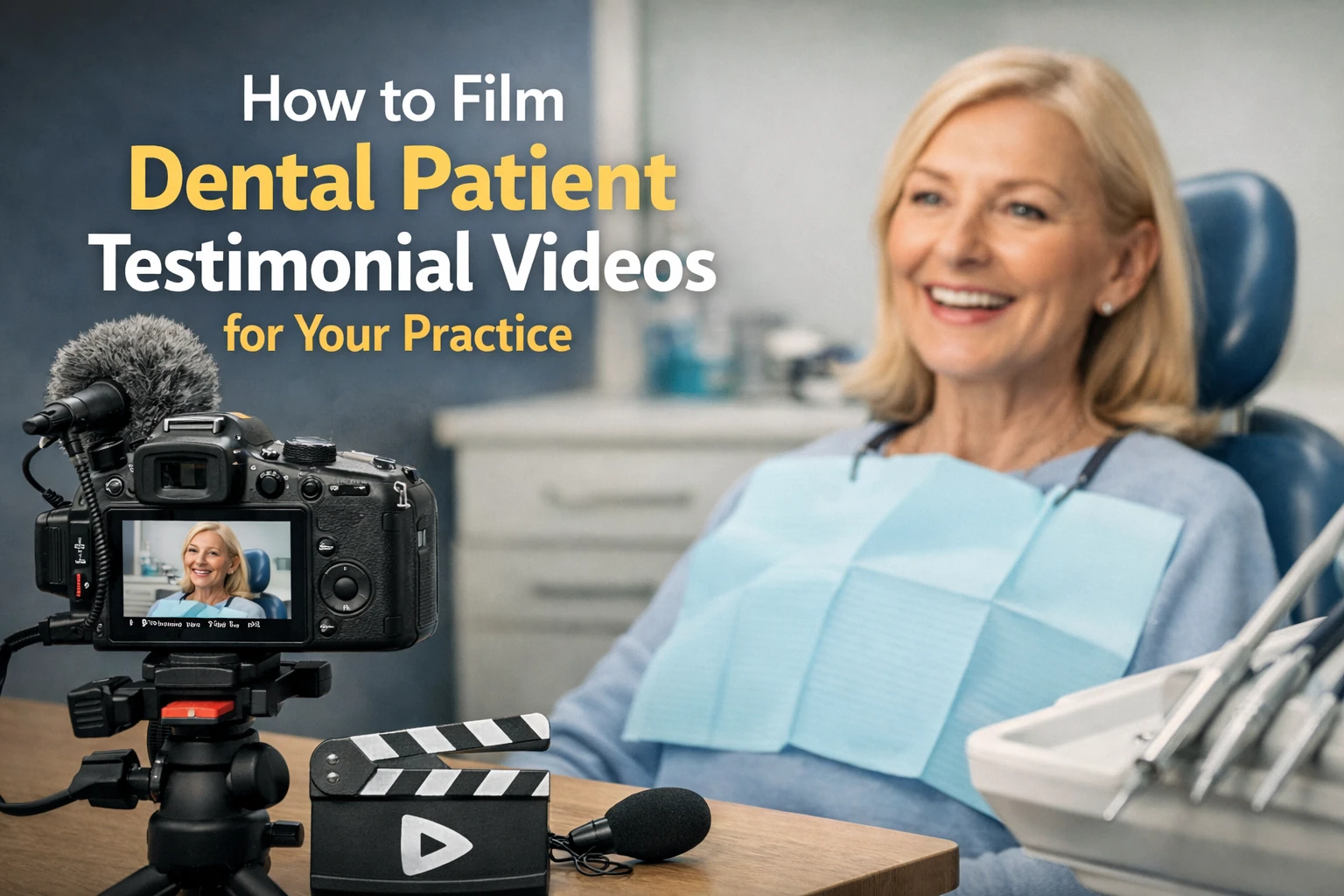 Filming dental patient testimonial videos for your dental practice requires a clear, repeatable process—from securing HIPAA-compliant patient consent and setting up affordable equipment to asking open-ended interview questions, editing for impact, and distributing across your website, social media, and paid advertising channels. When done consistently, patient testimonial videos become one of the most powerful tools in your dental video marketing strategy because they capture emotion, body language, and authenticity in a way that written reviews cannot replicate. A prospective patient watching someone describe their positive experience—real face, real voice, real results—builds trust and credibility on a level that no stock photo or ad copy can match. Filming dental patient testimonial videos for your dental practice requires a clear, repeatable process—from securing HIPAA-compliant patient consent and setting up affordable equipment to asking open-ended interview questions, editing for impact, and distributing across your website, social media, and paid advertising channels. When done consistently, patient testimonial videos become one of the most powerful tools in your dental video marketing strategy because they capture emotion, body language, and authenticity in a way that written reviews cannot replicate. A prospective patient watching someone describe their positive experience—real face, real voice, real results—builds trust and credibility on a level that no stock photo or ad copy can match.
The challenge most practices face isn’t convincing patients to participate. It’s the logistics: knowing what equipment to use, what questions to ask, how to stay HIPAA-compliant, and where to distribute the finished video so it actually generates appointments. In our work with dental practices across the country, we commonly see offices that record one or two testimonials, post them once, and never build a consistent system. The practices that turn testimonials into a real growth driver treat them like any other repeatable marketing workflow—with a process, a cadence, and a distribution plan.
This guide walks through every step, from selecting the right patients and setting up your filming environment to asking the questions that produce compelling stories, editing efficiently, and distributing across your website, social media, and paid campaigns.
Written for: dental practice owners, office managers, and marketing coordinators who want a step-by-step system for filming, editing, and distributing patient testimonial videos that generate trust and new patient appointments.
TL;DR
If you only have five minutes, here are the key takeaways:
| • |
Get HIPAA-compliant consent first — use a written media release form that specifies how and where the video will be used, includes an expiration date, and is stored for at least six years
|
| • |
Choose patients who have a story, not just a rating — patients who completed a transformation (orthodontics, implants, smile makeover, overcoming dental anxiety) produce the most compelling content
|
| • |
Keep it simple technically — a smartphone on a tripod, a clip-on lapel microphone, and natural or ring-light lighting are enough to produce professional-quality results
|
| • |
Ask open-ended questions that guide a narrative — prompt the patient to describe their before state, what the experience was like, and how the result changed their daily life
|
| • |
Target 30–90 seconds for the final cut — attention drops sharply after 60 seconds; edit ruthlessly and create shorter clips for social media
|
| • |
Distribute strategically — embed on service pages, post natively on social platforms, include in email nurture sequences, and use in paid ad campaigns for maximum reach |
Table of Contents
Why video testimonials outperform written reviews
Written reviews matter—and practices should absolutely continue generating them. But video testimonials occupy a different tier in the trust hierarchy because they add dimensions that text cannot: facial expressions, vocal tone, pauses, and the visible emotion of someone genuinely grateful for a result. A five-star Google review says “this was great.” A 45-second video of a patient smiling with tears in their eyes after a full-mouth reconstruction shows it.
Trust transfer is faster with video. When a prospective patient watches someone who looks like them, sounds like them, and had a similar concern describe a positive experience, the psychological distance between “I’m nervous about this” and “I think I can do this” shrinks dramatically. This is especially valuable for high-anxiety procedures like dental implants, sedation dentistry, and orthodontic treatment where fear is a primary barrier to booking.
Video also performs well from a technical marketing standpoint. Pages with embedded video tend to hold visitor attention longer, which sends positive engagement signals to search engines. Social media algorithms prioritize native video content, giving testimonial posts significantly more organic reach than static image or text posts. And in paid advertising, video ads consistently outperform static creative in click-through rate and cost-per-acquisition for dental practices.
The compound effect matters too. A single testimonial video can be repurposed into a website embed, a social media post, an ad creative, an email marketing asset, and a waiting-room display. One recording session with a willing patient can fuel weeks of content across multiple channels.
> Back to Table of Contents
HIPAA compliance and patient consent
Before you record anything, you need a signed, HIPAA-compliant media release form from the patient. This is non-negotiable. HIPAA’s Privacy Rule classifies testimonial content as marketing use of protected health information (PHI), which requires specific written authorization beyond what a standard Notice of Privacy Practices covers.
What your media release form should include:
| • |
The patient’s full name and signature — along with the date of signing
|
| • |
A clear description of what is being authorized — specifically that photographs, video recordings, and/or audio recordings of the patient may be used for marketing purposes
|
| • |
How the content will be used — list every intended medium: website, social media platforms, email marketing, paid advertising, in-office displays, and third-party platforms
|
| • |
An expiration date or expiration event — HIPAA requires the authorization to specify when it expires
|
| • |
A revocation clause — the patient must be informed they can revoke permission at any time, and the form should explain how to do so
|
| • |
Practice contact information — name, address, phone number, and a contact person for questions |
Recordkeeping is critical. Store the signed authorization for a minimum of six years, consistent with HIPAA documentation retention requirements. Make sure your team understands that no video can be published, shared, or used in any capacity until the signed form is on file.
A few additional compliance considerations: never reveal diagnosis or treatment details in the video that the patient has not explicitly authorized. If the patient mentions specific procedures or conditions on camera, confirm that this is information they are comfortable sharing publicly. Train any staff member involved in the filming process on what constitutes PHI and how to avoid accidental disclosures.
This guide provides general information about HIPAA considerations for testimonial videos. It is not legal advice. Consult with a healthcare attorney or your compliance officer for guidance specific to your practice and state.
> Back to Table of Contents
How to choose the right patients
Not every happy patient makes a great testimonial subject. The most compelling testimonial videos come from patients who have a story—a transformation, a fear overcome, a problem solved—not just a positive rating.
Look for these patient profiles:
| • |
Transformation patients — anyone who completed a visible change like orthodontics, veneers, implants, or a full smile makeover; the before-and-after arc gives viewers a concrete result to connect with
|
| • |
Anxiety-to-comfort patients — patients who were genuinely nervous about dental care and found their experience with your team reassuring; these stories resonate deeply with the large segment of prospective patients who avoid the dentist due to fear
|
| • |
Long-term loyal patients — patients who have been with the practice for years and can speak to consistency, trust, and the relationship they’ve built with the team
|
| • |
Emergency-to-resolution patients — someone who came in with a broken tooth or acute pain and left with a solution; urgency stories are relatable and show responsiveness
|
| • |
Patients from your target demographic — if you’re trying to attract more families, feature a parent; if you’re marketing implant services, feature an implant patient; matching the testimonial to the audience you want to reach makes it more effective |
How to ask: the best time to ask is right after a successful outcome, when the patient is genuinely happy. Keep it simple: “We’d love to feature your story in a short video to help other patients who might be going through the same thing. Would you be open to that?” Most patients who are enthusiastic about their result will say yes. Give them advance notice of the filming date and let them know it typically takes 10–15 minutes.
A pattern we commonly see: practices that ask three patients per week and film one testimonial per week build a library of 40–50 videos per year—more than enough to fuel a year-round content and advertising calendar.
> Back to Table of Contents
Equipment and filming setup
You do not need a professional film crew or expensive equipment to produce testimonial videos that look and sound good. What you do need is a stable camera, clear audio, and controlled lighting. A slightly “raw” feel can actually work in your favor—it reads as authentic. But shaky footage, poor audio, or dark lighting will undermine trust rather than build it.
Essential equipment
| • |
Smartphone (2020 or newer) — modern smartphones shoot high-quality video that is more than sufficient for testimonial content; no dedicated camera required
|
| • |
Tripod or phone mount — a stable shot is non-negotiable; handheld footage looks unprofessional and is distracting to watch
|
| • |
Clip-on lavalier (lapel) microphone — audio quality matters more than video quality for testimonials; a wired or wireless lavalier mic that clips to the patient’s shirt provides clear, direct sound and eliminates room echo
|
| • |
Ring light or portable LED panel — fills shadows on the patient’s face and creates a clean, even look; natural light from a window facing the patient also works well
|
| • |
Simple backdrop — a clean, uncluttered area of your office works best; the reception area, a treatment room (decluttered), or a branded wall all work |
Setup checklist
| 1. |
Declutter the filming area — remove visible trash cans, hand sanitizer bottles, personal photos, and anything that distracts from the speaker
|
| 2. |
Position the patient slightly off-center — using the rule of thirds creates a more natural, professional-looking frame than centering the subject
|
| 3. |
Place the camera at eye level — shooting slightly above or below eye level can feel unflattering or awkward
|
| 4. |
Attach the lapel mic and do a 10-second test recording — play it back to confirm the audio is clear and there is no background hum, echo, or interference
|
| 5. |
Check the lighting — the main light source should face the patient, not be behind them; backlighting puts the patient’s face in shadow
|
| 6. |
Turn off overhead music and silence phones in the room — background noise is distracting and makes the video feel less polished
|
| 7. |
Film horizontally for website and YouTube use — vertical format works better for social media stories and reels, so consider recording in landscape and cropping vertically in post-production |
Total equipment investment: a tripod, lavalier mic, and ring light can be purchased for under $150 combined. Most practices already have a smartphone that can handle the video quality requirements.
> Back to Table of Contents
Questions to ask during the interview
The questions you ask determine whether you get a flat, generic endorsement or a compelling patient story. The goal is to guide the patient through a narrative arc—before, during, and after—without scripting their answers. Open-ended questions produce the most authentic, usable content.
Core question framework
| 1. |
“What brought you to our practice?” — this establishes the “before” state: the problem, the concern, the need that prompted the visit
|
| 2. |
“What were your concerns or hesitations before treatment?” — this surfaces the fear or doubt that prospective patients watching the video are likely feeling right now
|
| 3. |
“What was your experience like during your visits?” — this captures the “during” phase: how the team treated them, how comfortable they felt, what stood out
|
| 4. |
“How has the result changed your daily life?” — this is the “after” payoff: the patient describing tangible benefits like confidence, comfort, or being able to eat foods they couldn’t before
|
| 5. |
“What would you say to someone who is considering the same treatment but hasn’t made the decision yet?” — this lets the patient speak directly to the viewer, which creates a powerful peer-to-peer trust moment
|
| 6. |
“Is there anything else you’d like to share?” — sometimes the best, most genuine soundbite comes from an unstructured moment at the end |
Tips for drawing out authentic answers
| • |
Send the questions in advance — not everyone is comfortable speaking extemporaneously; giving patients time to think produces more thoughtful, complete responses
|
| • |
Ask them to answer in complete sentences — coach the patient to incorporate the question into their answer (“What brought me here was...”) so the response works as a standalone clip without the interviewer’s voice
|
| • |
Stand directly behind the camera — this gives the patient a natural focal point and allows them to receive facial feedback and encouragement while they speak
|
| • |
Warm up with casual conversation first — small talk before rolling helps the patient relax so their on-camera demeanor matches how they naturally communicate
|
| • |
Avoid yes/no questions — “Did you like your experience?” gets a one-word answer; “What was your experience like?” gets a story |
> Back to Table of Contents
Filming day workflow
Having a repeatable filming workflow ensures that every session runs efficiently, the patient feels comfortable, and you consistently capture usable footage. A pattern we’ve found works well is to block 15–20 minutes per testimonial, including setup and teardown.
| 1. |
Confirm the signed media release is on file — verify before the patient sits down; do not rely on memory or assume it was collected at an earlier visit
|
| 2. |
Set up equipment 10 minutes early — tripod, mic, lighting, and camera angle should be ready before the patient arrives so you don’t waste their time
|
| 3. |
Brief the patient on what to expect — let them know approximately how long it will take, that there are no wrong answers, and that you’ll edit out any stumbles or pauses
|
| 4. |
Run a 10-second test clip — play it back to check audio levels, lighting, and framing; fix any issues before the real recording
|
| 5. |
Start with light conversation, then begin recording — keep the camera rolling through the warm-up; some of the best clips come from the relaxed moments before formal questions start
|
| 6. |
Work through your question framework — let the patient talk freely after each question; do not interrupt or redirect unless they go significantly off-topic
|
| 7. |
Ask the final “anything else” question — then thank the patient sincerely and stop recording
|
| 8. |
Review the footage briefly — confirm you captured usable content before the patient leaves; if a key answer was unclear, you can re-ask while they’re still there |
Film before treatment when possible. If you’re asking the patient during a scheduled appointment, record the testimonial before their procedure begins. Patients who have just had dental work may look flushed, numb, or uncomfortable—not ideal for video.
> Back to Table of Contents
Editing and formatting your videos
Editing is where raw footage becomes a marketing asset. The goal is to distill 10–15 minutes of conversation into a tight, emotionally resonant video that holds attention from the first second.
Editing principles
| • |
Target 30–90 seconds for the primary cut — viewer attention drops significantly after 60 seconds; a tightly edited 45-second video outperforms a rambling two-minute one
|
| • |
Front-load the most compelling moment — lead with the patient’s strongest statement or most emotional sentence; do not build slowly to the payoff
|
| • |
Cut the interviewer’s questions — the final video should feel like a continuous patient story, not a Q&A session
|
| • |
Add captions or subtitles — a significant percentage of social media users watch video with sound off, and captions also improve accessibility for viewers with hearing impairments
|
| • |
Include a brief text intro — a simple title card with the patient’s first name and the procedure (“Sarah — Dental Implants”) provides context instantly
|
| • |
End with your practice name and a subtle call to action
— a closing card with your logo, phone number, or website URL guides the viewer toward the next step |
Tools for editing
You do not need professional video editing software. Several accessible, affordable tools can handle testimonial editing:
| • |
CapCut (free) — intuitive mobile and desktop editor with auto-captioning built in; excellent for social media clips
|
| • |
iMovie (free on Apple devices) — straightforward editing with enough features for trimming, adding text overlays, and exporting at high quality
|
| • |
Canva Video (free/paid) — good for adding branded text overlays, title cards, and end screens with minimal editing experience
|
| • |
DaVinci Resolve (free) — a professional-grade desktop editor for practices that want more advanced control over color correction, audio mixing, and transitions |
Create multiple versions from one recording
| • |
Full-length version (60–90 seconds) — for your website service pages and YouTube channel
|
| • |
Short-form version (15–30 seconds) — for Instagram Reels, TikTok, Facebook Reels, and YouTube Shorts
|
| • |
Audio-only snippet — for podcast content or on-hold messaging
|
| • |
Quote graphic with still frame — pull the strongest one-sentence quote, overlay it on a still from the video, and use it as a social media image post |
> Back to Table of Contents
Where to distribute testimonial videos
A testimonial video that only lives on your YouTube channel is an underutilized asset. The practices that see the strongest return from video testimonials distribute them across every channel where prospective patients make decisions.
Website placement
| • |
Service-specific pages — embed an implant patient testimonial on your dental implants page, an orthodontic patient on your Invisalign page, and so on; matching the testimonial to the service the visitor is researching increases relevance and conversion potential
|
| • |
Homepage — feature one or two of your strongest testimonials prominently; this is often the first page a prospective patient sees on your dental website
|
| • |
Dedicated testimonials page — create a library page where visitors can browse multiple patient stories
|
| • |
Blog posts — embed relevant testimonials within educational blog content to add a social proof layer to informational pages |
Social media
| • |
Post natively on each platform — upload the video directly to Facebook, Instagram, TikTok, and YouTube rather than sharing a link; native uploads get significantly more reach from the algorithm
|
| • |
Use short-form clips for Reels and Shorts — repurpose the 15–30 second cut specifically for vertical short-form feeds
|
| • |
Pin top testimonials — pin your strongest testimonial video to the top of your Facebook page or Instagram grid for maximum visibility
|
| • |
Use patient-approved before-and-after photos as thumbnails — thumbnails that hint at a transformation attract more clicks |
Paid advertising
Video testimonials make highly effective ad creative for both social media ads and Google/YouTube campaigns. In our experience, testimonial-based video ads tend to outperform generic promotional creative because they carry inherent credibility. Use them as the primary creative in campaigns targeting prospective patients in your service area, especially for high-value services like implants, cosmetic dentistry, and orthodontics.
Email marketing
Embed or link to testimonial videos in new patient welcome sequences, treatment follow-up emails, and reactivation campaigns. A testimonial in a re-engagement email to lapsed patients can reignite interest more effectively than a standard “we miss you” message.
> Back to Table of Contents
Building a repeatable testimonial cadence
The biggest difference between practices that have a handful of testimonial videos and practices that have a full content library fueling year-round marketing is consistency. Treat testimonial filming the same way you treat any other recurring operational task—assign ownership, set a cadence, and track output.
A sustainable system looks like this:
| • |
Assign a testimonial coordinator — one team member (often a front desk lead or marketing coordinator) owns patient identification, consent collection, scheduling, and filming logistics
|
| • |
Set a weekly ask target — aim to ask at least three patients per week; expect roughly one in three to agree, which gives you ~4 filmed testimonials per month
|
| • |
Batch filming when possible — scheduling two or three testimonials on the same afternoon is more efficient than setting up and tearing down equipment for each one
|
| • |
Maintain a content calendar for distribution — map out which testimonials will be posted on which platforms and when; stagger releases to maintain a steady stream of fresh content
|
| • |
Track results — monitor engagement, website traffic, and appointment inquiries by testimonial; use those insights to guide what types of patient stories you prioritize going forward |
A realistic first-year target: if your team films just one testimonial per week and distributes each across four channels, you end the year with ~50 unique testimonial videos and ~200 distribution touchpoints. That volume transforms testimonials from an occasional marketing tactic into a core pillar of your patient acquisition strategy.
> Back to Table of Contents
Common mistakes and how to avoid them
Even practices that commit to testimonial video production can undermine their results with avoidable errors. Here are the most common ones we see:
| • |
Filming without a signed consent form — this is the most serious mistake; publishing a testimonial without HIPAA-compliant authorization exposes the practice to significant legal and financial risk
|
| • |
Over-scripting the patient — giving patients a word-for-word script destroys authenticity; viewers can tell when someone is reading or reciting; use guiding questions instead and let the patient speak naturally
|
| • |
Poor audio quality — a video with great picture but muffled or echoey audio is essentially unusable; always use a dedicated microphone and test before recording
|
| • |
Filming in a noisy environment — background conversations, overhead music, or hallway traffic are distracting and make the patient harder to hear
|
| • |
Making videos too long — respect viewer attention; a three-minute testimonial will lose most of its audience before the strongest moment; edit down to the best 45–60 seconds
|
| • |
Posting once and forgetting — a testimonial video shared once on Facebook and never used again is wasted effort; repurpose every recording across multiple channels and formats
|
| • |
Ignoring captions and subtitles — a large share of social media video is viewed without sound; no captions means no message for those viewers
|
| • |
Not matching testimonials to service pages — a general “great dentist” testimonial is fine, but a testimonial from an implant patient on your implant page is significantly more persuasive |
> Back to Table of Contents
Get help with your dental video marketing
Testimonial videos are one component of a comprehensive dental marketing strategy that includes SEO, paid advertising, social media, reputation management, and website optimization. If you want help building a system that turns patient stories into measurable growth, WEO Media can help.
Call us at 888-246-6906 or contact us to learn how we help dental practices attract more patients through strategic, results-driven marketing.
> Back to Table of Contents
FAQs
Do I need professional equipment to film dental patient testimonial videos?
No. A modern smartphone (2020 or newer), a tripod or phone mount, a clip-on lavalier microphone, and a ring light or natural light source are sufficient to produce professional-quality testimonial videos. Clear audio is the most important technical element, so investing in a dedicated microphone makes the biggest difference. Total equipment cost for a basic testimonial kit is typically under $150.
How long should a dental patient testimonial video be?
The ideal length for a primary testimonial video is 30 to 90 seconds, with 45 to 60 seconds being the range where most viewers stay engaged. For social media short-form platforms like Instagram Reels, TikTok, and YouTube Shorts, 15 to 30 seconds is optimal. Record longer raw footage during the interview and edit down to the strongest moments for each format.
Do I need HIPAA consent for patient testimonial videos?
Yes. HIPAA requires a signed, written authorization from the patient before using any testimonial content that involves protected health information for marketing purposes. The authorization form must describe what is being recorded, how and where it will be used, include an expiration date, and inform the patient of their right to revoke consent. Store the signed form for a minimum of six years.
What questions should I ask a patient during a testimonial video?
Focus on open-ended questions that guide a narrative arc. Ask what brought them to the practice, what concerns they had before treatment, what their experience was like during visits, how the result has changed their daily life, and what they would say to someone considering the same treatment. Avoid yes-or-no questions and let the patient respond in their own words.
Where should I post dental patient testimonial videos?
Distribute testimonial videos across multiple channels for maximum reach. Embed them on relevant service pages and your homepage, upload natively to Facebook, Instagram, TikTok, and YouTube, include them in email marketing sequences, and use them as paid ad creative. Matching the testimonial topic to the page or campaign where it appears increases relevance and conversion potential.
How often should a dental practice film testimonial videos?
A sustainable target is one testimonial per week. Ask at least three patients per week to participate, and expect roughly one in three to agree. At that pace, a practice can build a library of approximately 50 testimonial videos per year, which is enough to fuel consistent content across website, social media, email, and advertising channels year-round.
Should I film testimonial videos horizontally or vertically?
Film in horizontal (landscape) orientation for website embeds and YouTube, and use vertical orientation for social media stories and short-form platforms. One practical approach is to record in landscape and crop to vertical during editing for social media use, giving you both formats from a single recording session.
Can I offer patients an incentive to record a testimonial video?
Small gestures of appreciation, such as a thank-you card or a modest gift, are common practice. However, be transparent about any incentive and avoid anything that could be perceived as paying for a positive endorsement, which could undermine credibility with viewers and raise ethical concerns. The testimonial should always reflect the patient’s genuine, uncoerced experience. Check your state dental board regulations, as rules on patient incentives can vary. |
|