Dental Office Design and Patient Marketing
Posted on 6/28/2026 by WEO Media |
How to Make Your Space Attract and Convert More Patients
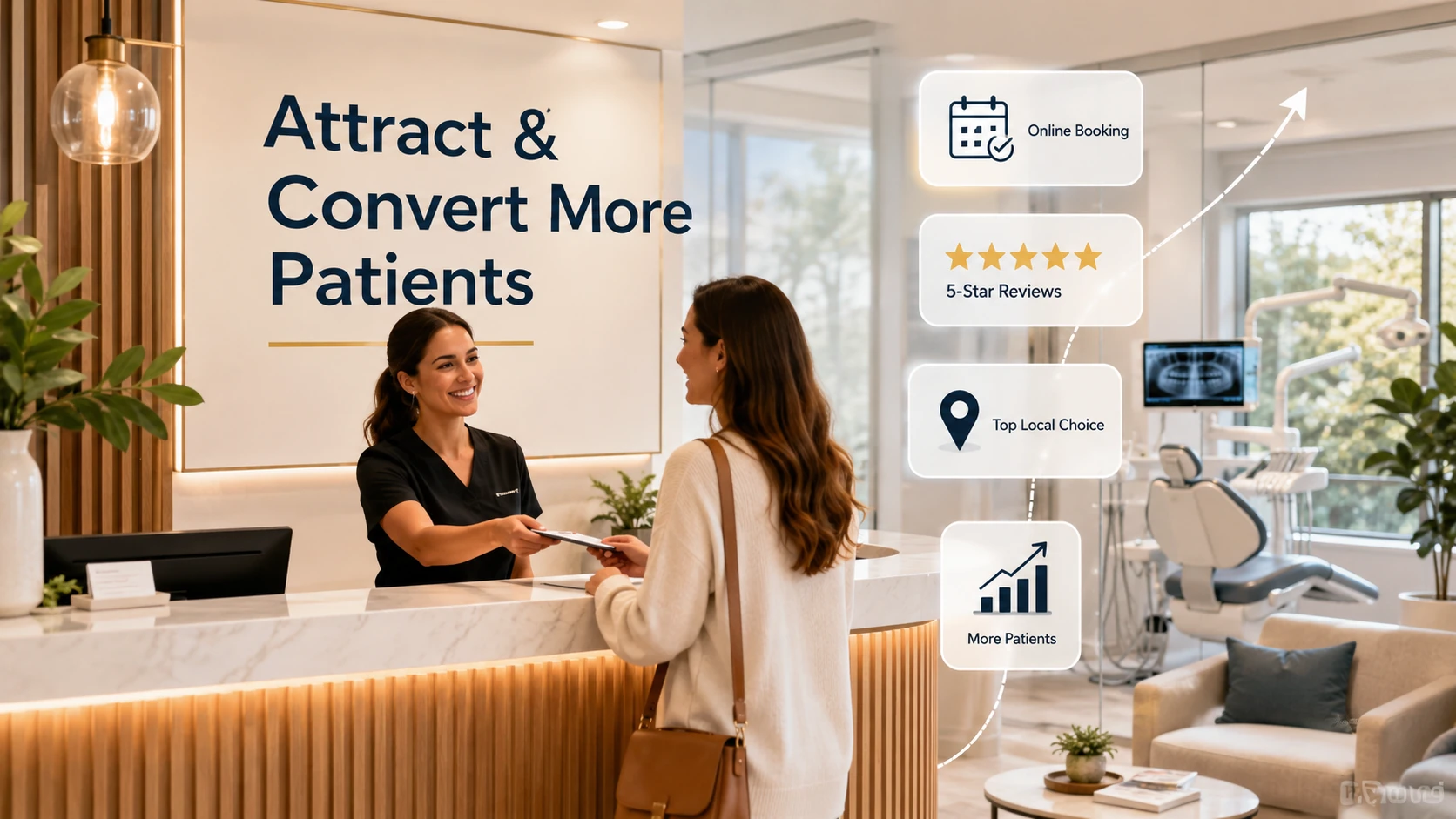 Dental office design is one of the most overlooked drivers of your patient marketing: for dental and specialty practices, the way your space looks in photos, on video, and in person directly shapes how many patients you attract, how many you convert into booked appointments and accepted treatment, and how many leave the reviews that bring in your next wave of new patients. Dental office design is one of the most overlooked drivers of your patient marketing: for dental and specialty practices, the way your space looks in photos, on video, and in person directly shapes how many patients you attract, how many you convert into booked appointments and accepted treatment, and how many leave the reviews that bring in your next wave of new patients.
The connection is easy to miss because design and marketing usually sit in different budgets. Patients, though, don’t separate the two. Before anyone calls, they’ve already judged your practice from the photos on your profile, the hero image on your website, and the building they drive past. After they arrive, the lighting, the sound, the seating, and the cleanliness of your treatment rooms decide whether they relax, accept care, and leave the kind of review that does your marketing for you.
Already spending on ads, SEO, and reviews? This is the multiplier most practices skip. A great campaign that sends patients to a tired, confusing, or hard-to-access office quietly wastes part of every dollar you spend.
Below, you’ll see exactly how your office becomes marketing — online and in person — and how to turn a remodel, a new build, or even small upgrades into measurable patient growth, without overstating results or paying for changes patients never notice.
Written for: dental practice owners, specialty practices (oral surgery, periodontics, prosthodontics, endodontics, orthodontics, and pediatric and family dentistry), DSOs, office managers, and marketing coordinators who want their physical space to pull its weight in patient acquisition.
TL;DR
If you only do five things, do these:
| 1. |
Treat your office as a marketing asset, not just overhead - the space patients see online and in person shapes bookings, treatment acceptance, and reviews
|
| 2. |
Win the first impression online - real, high-quality photos of your entrance, reception, treatment rooms, team, and technology decide who calls before they ever visit
|
| 3. |
Design the in-person journey to lower anxiety - calmer patients accept more care and write better reviews, so reduce friction from the parking lot to the checkout desk
|
| 4. |
Make accessibility a feature, not an afterthought - meeting accessibility standards is the law and a real differentiator you can market
|
| 5. |
Measure what design does for marketing - track reviews, profile photo engagement, consult-to-treatment rate, and new-patient feedback so you invest in changes that actually move the needle |
Table of Contents
Why your dental office design is a patient-marketing asset
Marketing gets patients to consider you. Your office decides whether they choose you, accept treatment, and recommend you. That is the loop most practices never connect: design shapes experience, experience shapes reviews and word of mouth, and word of mouth feeds your next round of marketing. A strong campaign pointed at a weak space leaks demand, while a well-designed space makes every channel work harder.
This matters more in dentistry than in most local businesses because the stakes feel personal to patients. Research consistently finds that a large share of adults feel some level of dental anxiety, with estimates varying widely depending on how it is measured. An office that reads as calm, clean, modern, and welcoming does real marketing work: it lowers the perceived risk of booking and gives nervous patients a reason to say yes instead of putting it off again.
There is also a hard-nosed financial angle. You are already paying for the building, the chairs, the lighting, and the signage. Framing those as marketing assets — things that can be photographed, shown, and felt — earns you a second return on money you have already spent, instead of treating the space as a cost that ends at the front door.
> Back to Table of Contents
How your office shows up before patients walk in
For most new patients, the first tour of your office happens on a screen. They see your practice on your Google Business Profile, your website, and social media long before they reach your door — and they form a judgment in seconds. The highest-leverage move here is real, high-quality photography of the actual space, not stock images, which read as generic at best and dishonest at worst and are discouraged or removed on major platforms.
Capture the places patients silently evaluate:
| • |
The exterior and entrance - the building, signage, and parking as a first-time visitor will actually see them, which lowers arrival anxiety and reduces no-shows
|
| • |
The reception and waiting area - usually the most-viewed interior photo for a practice, so shoot it clean, bright, and uncluttered
|
| • |
Treatment rooms - clean, organized, and modern, with no patients and no patient information visible
|
| • |
Your team - approachable, professional photos of the dentists and patient-facing staff, since patients choose people they feel comfortable with
|
| • |
Your technology - visible modern equipment signals clinical investment and capability, which reassures patients who are comparing options |
A few practical rules make the difference. Keep images current so the office patients see online matches the office they walk into, use descriptive and keyword-aware file names and captions, and add fresh photos regularly, because freshness is a real signal for local visibility and a cue that you are open and active. Short video walkthroughs and virtual tours go further still, letting anxious patients preview the space and build familiarity before they ever arrive.
One compliance habit is worth building into your process: never show patient faces, charts, screens, or any identifying information in marketing imagery, and get written permission for staff and any real patients who appear. The goal is an honest, flattering, privacy-safe picture of your practice.
> Back to Table of Contents
The in-office journey: every touchpoint is a marketing moment
Once a patient arrives, your office stops being a photo and starts being an experience — and every step either builds trust or chips away at it. Walk the journey in order to find the moments that quietly cost you reviews and referrals:
| 1. |
Arrival - clear signage, easy parking, and an obvious accessible entrance tell patients you have thought about them before they say a word
|
| 2. |
Reception - a clean, calm, well-lit front desk and a friendly greeting set the emotional tone for everything that follows
|
| 3. |
The wait - comfortable seating, a tidy space, natural light, and a sense of order signal respect for the patient’s time
|
| 4. |
The operatory - this is where anxiety peaks, so visible cleanliness, organized instruments, modern equipment, and small comforts matter most
|
| 5. |
Checkout - a private, unhurried space for scheduling and payment ends the visit on dignity instead of awkwardness |
The through-line is anxiety. Environmental cues — lighting that is warm rather than harsh, sound that is controlled rather than clinical, finishes that read as clean and current — lower the stress response that makes patients hesitate, cancel, or decline treatment. Calmer patients are easier to treat, more likely to accept recommended care, and far more likely to describe the visit warmly in a review.
A useful habit is to walk your own office as if it were your first time, or ask someone who has never been in to do it and narrate what they notice. The gaps between how the space feels to you and how it feels to a stranger are exactly the gaps your marketing is fighting against.
> Back to Table of Contents
Design details that earn reviews and treatment acceptance
Some design choices punch far above their cost because they land on the exact moments when patients decide to trust you, book again, or accept a treatment plan. You do not need a full remodel to capture most of the benefit:
| • |
Lighting - warm, even, layered lighting flatters the space and calms patients, while harsh overhead fluorescents read as cold and dated
|
| • |
Sound - softer acoustics, gentle background audio, and reduced equipment noise ease one of the biggest anxiety triggers in many offices
|
| • |
Cleanliness signals - visible tidiness, fresh surfaces, and uncluttered counters do more for perceived quality than almost anything else
|
| • |
Comfort touches - blankets, headphones, water, and clear sightlines give nervous patients a sense of control
|
| • |
Consultation space - a calm, private room with a screen for images and treatment plans helps patients understand and accept recommended care |
The consultation room deserves special attention because it is where marketing turns into revenue. When patients sit comfortably, see their own images on a large screen, and have treatment explained without feeling rushed or watched, case acceptance improves. That is persuasion work no ad can do.
The reviews loop closes here, too. The specific things patients praise in five-star reviews — “so clean,” “calming,” “modern,” “they explained everything” — are almost always design and experience outcomes. Those reviews then become the social proof that wins the next patient, which is why your space and your marketing are really one system.
> Back to Table of Contents
Accessible, inclusive design that strengthens your brand
Accessibility is where compliance and marketing meet. Dental offices are places of public accommodation under Title III of the Americans with Disabilities Act, which makes physical access a legal obligation rather than a nicety. New construction and alterations must meet the 2010 ADA Standards for Accessible Design, and existing offices are expected to remove barriers where doing so is readily achievable for their size and resources.
In practice, that touches features patients feel directly:
| • |
Parking and approach - accessible parking with proper signage and a clear, unobstructed path to the entrance
|
| • |
Entrance - doors that are easy to open, with attention to door-opening force and an accessible route inside
|
| • |
Reception - a lowered section of the front counter so seated patients can check in comfortably
|
| • |
Restrooms - grab bars, accessible fixtures, and enough room to turn a wheelchair
|
| • |
Communication access - large-print materials and reasonable accommodations so patients with hearing, speech, or vision differences can understand their care |
The marketing upside is real and underused. More than one in four U.S. adults lives with a disability, and many more are parents, caregivers, and older patients who notice whether a space includes them. Showing your accessible entrance and parking in your photos, and describing your accommodations plainly, signals care to a large audience that is too often ignored. Accessibility done well is not just risk management — it is a trust signal you can put front and center.
> Back to Table of Contents
Aligning your space with your brand and marketing
Patients feel it when your marketing and your physical space tell two different stories. A sleek, modern website that opens onto a dated, mismatched waiting room creates quiet dissonance — the kind that makes people trust you a little less without knowing why. Consistency is what turns a nice office and a nice website into a recognizable brand.
Alignment is mostly the repetition of a few simple things: the same colors, the same logo, the same typography, and the same tone across your signage, your website, your profile photos, and your social posts. When the blue on your wall matches the blue in your logo, and the warmth of your photos matches the warmth patients feel at the desk, the whole experience reads as intentional and trustworthy.
This is also where a remodel pays a hidden dividend. If you are refreshing the space anyway, align it with your brand identity at the same time — or update your brand to match a beautiful new space — so your marketing assets and your real-world environment reinforce each other instead of competing.
> Back to Table of Contents
Turn a redesign or new build into a marketing campaign
A renovation or new office is one of the best marketing events a practice ever gets, and most let it pass with a single social post. A reveal is a reason to reach every audience you have and to earn attention you would otherwise pay for.
Build the campaign around the change:
| • |
Plan the photo and video shoot first - schedule professional capture of the finished space before you book a single patient into it, while it is pristine
|
| • |
Tell a before-and-after story - the transformation is inherently engaging and gives patients a concrete reason to take a fresh look
|
| • |
Refresh every channel at once - update profile photos, website imagery, and social headers so the new look is everywhere patients meet you
|
| • |
Announce it directly - email existing patients, post the reveal, and consider a reopening or open-house moment that invites people in
|
| • |
Keep it active - share progress and finished details over several weeks rather than in one post, since freshness compounds your visibility |
The strategic point is timing and sequencing. The window when your space looks its absolute best is short, so capture it before daily use, then release that content steadily. Done well, a redesign does not just improve the in-office experience — it generates weeks of authentic, high-performing marketing material from an investment you were going to make anyway.
> Back to Table of Contents
How to measure design against your marketing results
Design can feel subjective, but its impact is measurable if you track the right marketing signals before and after changes. The point is to invest in what patients actually respond to and to stop paying for details they never notice.
Track a handful of indicators:
| • |
Review themes - watch for words like clean, calm, modern, and comfortable, and note whether they rise after a refresh
|
| • |
Profile photo engagement - direction requests, calls, and website clicks from your listing tend to climb when quality photos are added
|
| • |
New-patient feedback - ask new patients what made them choose and book you, and listen for space and experience cues
|
| • |
Consult-to-treatment rate - track whether case acceptance improves after upgrading your consultation and operatory environments
|
| • |
No-show and cancellation patterns - clearer arrival information and a calmer experience can reduce the friction that leads to drop-off |
Keep the measurement honest. Many things move these numbers at once, so treat design as one contributor rather than the sole cause, and look for consistent direction over time instead of a single dramatic jump. The goal is a simple feedback loop: change something, watch how patients and your listings respond, and let real signals — not guesswork — guide the next investment.
> Back to Table of Contents
Make your space and marketing work together
Your office and your marketing are one system, and they perform best when they are planned together. WEO Media - Dental Marketing helps dental and specialty practices turn their physical space into photos, video, and messaging that attract the right patients and convert them — from your Google Business Profile and website to the reviews and reputation that follow. Whether you are remodeling, building, or simply ready to make your space pull its weight, our team can help you capture and market it well. Call 888-246-6906 to talk through your goals.
> Back to Table of Contents
FAQs
Does dental office design really affect patient marketing results?
Yes. The space patients see in your photos and experience in person shapes who books, who accepts treatment, and who leaves positive reviews. Those reviews and that word of mouth then feed your next round of marketing, so design and marketing function as one connected system rather than separate line items.
What office photos matter most for attracting new dental patients?
Real, high-quality photos of your exterior and entrance, reception and waiting area, treatment rooms, team, and visible technology carry the most weight, and the waiting room image is often the most-viewed interior photo for a practice. Avoid stock images, keep photos current, and never show patient faces, charts, or any identifying information.
How does office design influence dental treatment acceptance?
Calmer patients accept more care. Warm lighting, controlled sound, visible cleanliness, and small comfort touches lower anxiety, and a private, well-equipped consultation room where patients can see their own images on screen helps them understand and say yes to recommended treatment. Design does persuasion work that advertising alone cannot.
Do dental offices have to meet accessibility requirements?
Yes. Dental offices are places of public accommodation under Title III of the Americans with Disabilities Act. New construction and alterations must meet the 2010 ADA Standards for Accessible Design, and existing offices are expected to remove barriers where it is readily achievable for their size and resources. Accessibility is also a genuine marketing advantage you can highlight.
Do I need a full remodel to see a marketing benefit?
No. Many high-impact changes are inexpensive: better lighting, softer sound, decluttered surfaces, fresh paint, professional photography, and a calmer consultation setup. Start with the touchpoints patients judge most — the entrance, waiting area, and operatory — and capture the improvements for your marketing as you make them.
How should I market a dental office renovation or new location?
Treat the reveal as a campaign. Schedule professional photo and video capture before the finished space is used, tell a before-and-after story, refresh your profile, website, and social imagery at once, announce it to existing patients, and consider an open-house moment. Release the content steadily over several weeks so the freshness keeps working for you.
How do I measure whether my office design is helping marketing?
Watch review themes for words like clean, calm, and modern, track direction requests and website clicks from your listing after adding photos, ask new patients what made them choose you, and monitor consult-to-treatment and no-show rates around any changes. Treat design as one contributor among many and look for consistent direction over time. |
|