Holiday Dental Marketing: How to Plan for November & December Campaigns
Posted on 7/6/2026 by WEO Media |
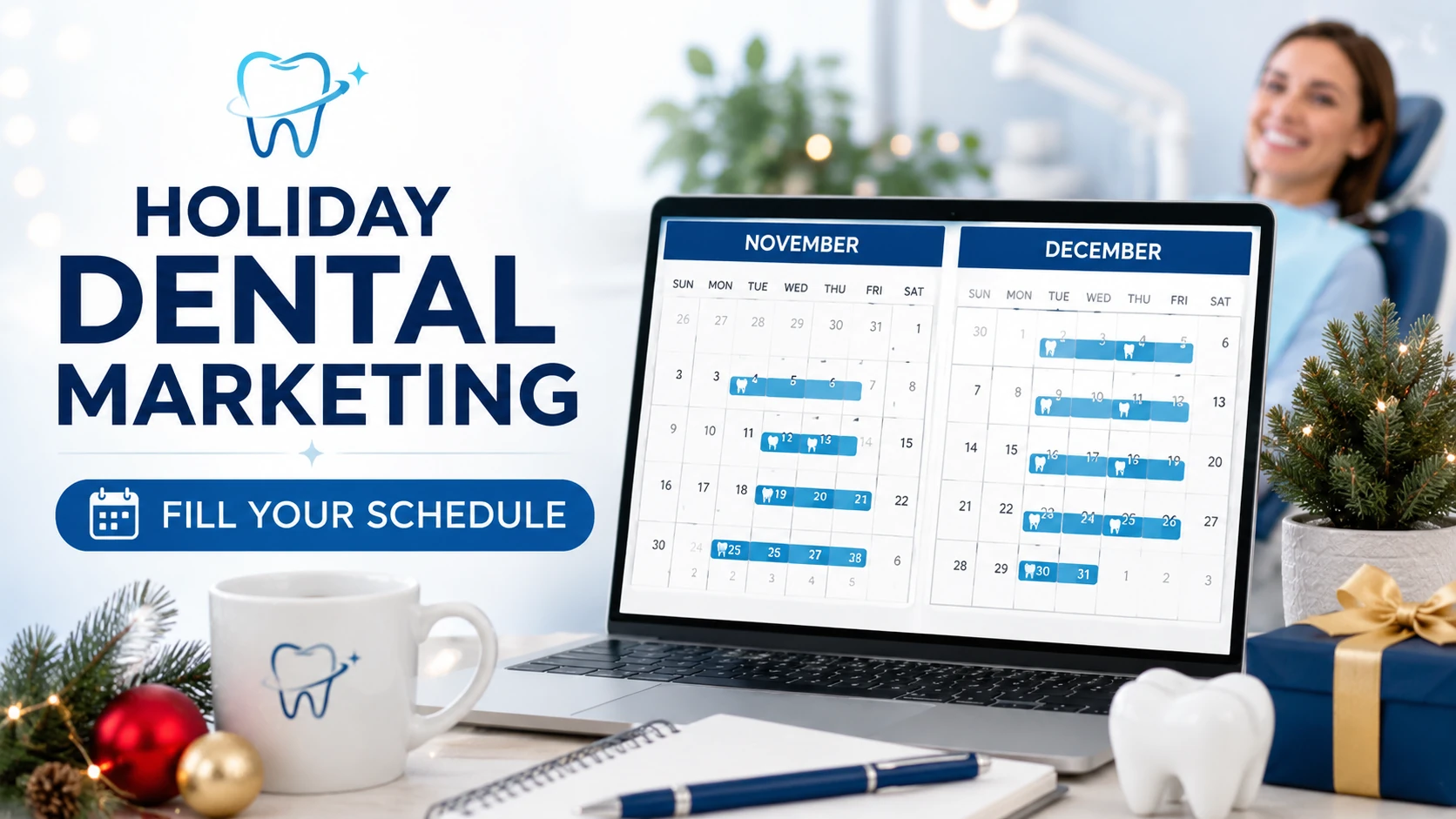 Holiday dental marketing is a coordinated November and December campaign plan that fills your schedule during a normally slow stretch—using expiring insurance benefits and FSA dollars, gift-worthy cosmetic treatment, and early-in-the-year bookings to turn year-end into one of your busiest seasons. Holiday dental marketing is a coordinated November and December campaign plan that fills your schedule during a normally slow stretch—using expiring insurance benefits and FSA dollars, gift-worthy cosmetic treatment, and early-in-the-year bookings to turn year-end into one of your busiest seasons.
If your schedule thins out after Thanksgiving while unused patient benefits quietly expire on December 31, the fix is not more discounts. It is a small set of well-timed, well-targeted campaigns aimed at the patients who already have a reason to come in.
The mechanics repeat every year, which is exactly what makes them reliable. For most patients, dental insurance annual maximums reset on January 1 and do not roll over, deductibles they have already met reset at the same time, and money sitting in a flexible spending account is typically forfeited at year’s end. That combination gives your existing patients a genuine, wallet-based reason to complete recommended treatment now rather than in February—and it gives your practice a way to fill November and December without resorting to gimmicks.
Below, you’ll get a month-by-month campaign calendar, the specific campaigns that consistently fill chairs, the channels that carry each message, a segmentation approach so the right patient hears the right thing, and—because this is healthcare advertising—the compliance guardrails that keep a well-meaning promotion from creating a real problem. We’ll finish with how to measure results and carry December’s momentum into a fully booked January.
Written for: dental practice owners, office managers, and in-house marketing teams—including specialty offices and DSO marketing leads—who want a repeatable plan for November and December instead of a scramble in the last two weeks of the year.
TL;DR
If you do only a handful of things this season, do these:
| • |
Lead with expiring benefits, not discounts - insurance annual maximums and met deductibles reset January 1 and most FSA dollars expire December 31, so unused benefits are the strongest and most patient-friendly reason to book before year’s end (note that HSA funds do not expire—do not lump them in)
|
| • |
Sequence the quarter - start expiring-benefits reminders in late October or early November, raise urgency in early-to-mid December, and front-load the message before the late-December travel slowdown
|
| • |
Run the core plays - benefits-and-incomplete-treatment reminders, overdue-hygiene recall, cosmetic and whitening with gift certificates, new-patient and emergency search ads, and lapsed-patient reactivation
|
| • |
Match the channel to the message - email and text for existing patients, paid search and local SEO for new ones; for “dentist near me” searches your Google Business Profile and reviews drive visibility, because AI Overviews no longer appear on local provider queries
|
| • |
Keep it compliant - structure any offer to avoid insurance-billing and state-board pitfalls, get express consent before texting, protect patient health information, and frame urgency as a service rather than a scare tactic
|
| • |
Measure every campaign - use call tracking and GA4 key events to tie calls and booked visits back to each campaign so you can prove return and repeat what worked
|
| • |
Bridge to January - use the quiet week between the holidays to pre-book resolution-driven and new-benefit-year patients so Q1 starts full |
Table of Contents
Why November and December are your highest-leverage months
The holidays reward dental practices for one simple reason: at year’s end, your patients have money on the table that they lose if they do nothing. Understanding exactly what expires—and what does not—lets you build messaging that is accurate, urgent, and genuinely in the patient’s interest.
Three separate year-end forces work in your favor, and they stack:
| • |
Insurance annual maximums reset - most dental plans cap what they pay per calendar year, and unused benefit dollars do not carry into the next year; a patient with pending treatment and remaining benefits is leaving covered care unused
|
| • |
Deductibles reset - a patient who has already met this year’s deductible can complete additional recommended treatment before December 31 without starting over on a new deductible in January
|
| • |
FSA dollars expire - flexible spending account funds generally follow a “use it or lose it” rule at the end of the plan year, so eligible dental care is a smart way to spend down a balance before it is forfeited |
Here is the accuracy point most holiday campaigns get wrong, and getting it right builds trust: a health savings account (HSA) is not the same as an FSA. HSA funds roll over indefinitely and belong to the patient, so they never expire. Lumping “FSA/HSA” together in a “spend it before it’s gone” message is factually incorrect and can undermine your credibility with the financially literate patients you most want to reach. Reserve the expiration urgency for FSAs, annual maximums, and deductibles; position HSAs and financing as flexible ways to pay.
The strategic implication is that your warmest, highest-yield audience is not strangers—it is the patients already in your system with unused year-end benefits and unscheduled treatment. In our work with practices, the single most productive November email is rarely a promotion at all; it is a plain reminder that a patient has covered treatment waiting and a limited window to use it.
> Back to Table of Contents
Your November and December campaign calendar
Timing is the difference between a calm, productive quarter and a frantic last-minute push. The season really runs from late October through the first week of January, and each stretch has a job to do within your broader marketing calendar. Start early: patients need lead time to schedule, arrange time off work, and—for larger cases—get treatment sequenced before the calendar flips.
Late October to early November: set up and warm up
Confirm your holiday hours and post them everywhere patients look, including your website and Google Business Profile. Pull two lists from your practice management software: patients with remaining benefits and incomplete treatment plans, and patients overdue for hygiene who have not booked their second visit of the year. Draft your email sequences and text messages now so they are ready to send, and add a simple seasonal banner to your homepage. This is also the window to launch or refresh new-patient search ads so they are gathering momentum before December.
November: launch benefits reminders and gratitude
November carries two complementary messages. The first is the year-end benefits reminder—helpful, specific, and aimed at patients with something to use. The second is gratitude: a genuine thank-you to your patient community sets a warm tone and earns goodwill without asking for anything. Practices that pair a benefits reminder with an authentic appreciation message tend to see better engagement than either sent alone, because the reminder feels like a service rather than a sales pitch.
Early-to-mid December: raise the urgency
This is the highest-intent window of the season. Patients now feel the deadline, and your message can say so plainly: limited appointments remain before the year ends, and covered treatment completed now avoids a reset in January. Tighten your follow-up—have the front desk personally call high-value patients with unscheduled treatment during any downtime, and make online booking effortless. Front-load this push; do not wait until the final week, when many patients are traveling or distracted.
Late December: capture stragglers and pivot to January
The last stretch is genuinely slow for routine care—patients travel, offices close, and attention is elsewhere. Two plays still work. First, run emergency and “open now” search ads, because travelers and patients whose regular office is closed are actively searching for same-day help. Second, use the quiet time to plan: finalize January outreach, tee up new-benefit-year and resolution messaging, and pre-book patients who want an early-January start. December’s slow week is January’s setup.
For multi-location groups and DSOs, coordinate the calendar centrally but let each location honor its own hours and capacity. A shared template with location-level personalization keeps the brand consistent while respecting that one office may be booked solid while another has room to fill.
> Back to Table of Contents
The core holiday campaigns that fill your schedule
You do not need a dozen campaigns. You need a few that map to how patients actually behave at year’s end. Each of the following targets a specific audience with a specific reason to book.
Expiring-benefits and incomplete-treatment reminders
This is the highest-return campaign of the season, full stop. Target existing patients who have remaining insurance benefits, an already-met deductible, or a treatment plan that was diagnosed but never scheduled. The message is simple and honest: you have covered treatment waiting, and your benefits reset soon. In our experience, this outperforms every discount because it costs the practice nothing and helps the patient use care they have already paid for through premiums.
Overdue-hygiene recall
Many patients complete only one of two covered hygiene visits in a year. A focused recall to that group—framed around finishing the year with a clean bill of health and using the recare benefit before it resets—fills hygiene columns that are otherwise easy to leave empty in December.
Cosmetic and whitening with gift certificates
The holidays are peak season for looking your best in family photos and gatherings, which makes elective cosmetic treatment—whitening in particular—an easy seasonal offer. Add gift certificates patients can buy for a spouse, parent, or friend. Because cosmetic care is typically not billed to insurance, this is also the safest category for promotional pricing (more on that in the compliance section). Position it as a gift and a treat, not a clinical necessity.
New-patient and emergency search ads
Direct mail loses steam during the holidays, but paid search shines because it captures people actively looking. Run new-patient campaigns with ad copy that mentions using benefits before year-end, and run a separate campaign to capture emergency dentist searches for the many days when nearby offices are closed and travelers need urgent care. These often convert at a premium because the searcher has immediate intent.
Lapsed-patient reactivation
Every practice has patients who drifted away, with no appointment in twelve to eighteen months. The year-end deadline is a natural, low-pressure reason to reach back out: a short “we’d love to see you before your benefits reset” message can win back patients who simply fell off the schedule. Reactivating an existing relationship is almost always cheaper than acquiring a new patient.
Specialty offices can adapt the same plays: orthodontic practices can promote consultations and starts before benefits reset, oral surgery and periodontal offices can remind patients to complete recommended treatment before the deductible resets, and pediatric practices can combine the second-hygiene-visit reminder with year-end benefits messaging to parents.
> Back to Table of Contents
Channels: where to run each holiday campaign
The right message on the wrong channel underperforms. Match each campaign to where your audience actually is, and reinforce the message across two or three touchpoints rather than relying on one.
| • |
Email - the workhorse for existing patients; a short three-part December sequence (a helpful holiday note, a benefits reminder, and a final-countdown nudge with open times) reaches your base at low cost
|
| • |
Text message - the highest open rates and ideal for time-sensitive nudges, but only to patients who have given express consent to receive marketing texts
|
| • |
Social and Google Business Profile posts - use the channels where your audience already engages; a benefits countdown or a whitening offer works well as a post, and GBP posts add fresh signals to your local presence
|
| • |
Paid search - the best channel for new-patient and emergency demand during the holidays because it captures active intent when direct mail fades
|
| • |
Website banner and landing pages - a simple seasonal banner on your homepage (not an intrusive pop-up) plus a dedicated page for your offer gives every other channel a place to send traffic
|
| • |
Direct mail - less effective in the holiday clutter, but still useful for reactivation and for reaching patients who are not active online, especially when paired with a matching digital touch
|
| • |
Front desk and in-office - signage, a QR code to book, and personal calls from your team during downtime turn existing traffic and slow moments into booked appointments |
One current point worth understanding for local visibility: for “dentist near me” and similar local provider searches, Google no longer shows AI Overviews. Those searches are driven by the map pack, your Google Business Profile, and local reviews. So for new-patient acquisition, invest in an accurate, active Google Business Profile and a steady flow of recent reviews rather than chasing a citation in an AI answer that does not appear for local searches in the first place.
> Back to Table of Contents
Segment your list so the right message reaches the right patient
A single blast to your entire list wastes your best opportunities and annoys everyone else. The practices that win the season segment their patients and tailor the ask. Most practice management and patient communication systems can build these lists in a few minutes.
| • |
Remaining benefits plus incomplete treatment - your highest-value segment; message the specific opportunity to complete covered care before it resets
|
| • |
Overdue for hygiene - patients who have used only one covered cleaning this year; nudge them to finish the year current
|
| • |
FSA-likely patients - anyone who has mentioned or historically used an FSA; a spend-it-before-you-lose-it reminder is timely and welcome
|
| • |
Cosmetic-interested - patients who asked about whitening or cosmetic work; a holiday offer meets existing interest
|
| • |
Lapsed patients - no visit in roughly twelve to eighteen months; a gentle year-end reason to return
|
| • |
New-patient prospects - reached through paid search and local SEO rather than your existing list, with benefits-focused ad copy |
Personalization matters more than volume. A message that names the patient’s actual situation—a pending crown, an unused cleaning, a benefit about to reset—earns far more bookings than a generic “happy holidays from our office” sent to everyone at once—just keep that targeting on the right side of patient health information rules so clinical details never reach the wrong inbox.
> Back to Table of Contents
Stay compliant: the rules that make or break holiday promotions
This is the section most holiday marketing advice skips, and it is the one that can turn a well-intentioned campaign into a genuine liability. Dental advertising sits at the intersection of healthcare, insurance, and consumer-protection rules. None of the following is legal advice—your own counsel and your state dental board have the final word—but these are the guardrails every practice should have in view before launching a year-end offer.
| • |
Discounts and insurance billing - offering free or discounted services to insured patients can create problems if it misrepresents your usual fee to a payer or effectively waives required copays; many states and payer contracts have specific rules here, which is why promotional pricing is safest on services not billed to insurance, such as cosmetic whitening
|
| • |
State dental board advertising rules - most boards prohibit false, misleading, or deceptive advertising, and some restrict how “free” or discounted offers are presented; check your state’s specific requirements before publishing an offer
|
| • |
Text message consent - marketing texts generally require prior express written consent under federal rules, and promotional messages are treated differently from appointment reminders; keep your consent records clean and honor opt-outs immediately
|
| • |
Patient health information - using treatment history to target outreach touches protected health information; keep messages generic enough that they do not disclose specifics to the wrong person, and make sure your communication vendors are covered under a business associate agreement
|
| • |
Email rules - commercial email must include a working unsubscribe link, an accurate subject line and sender, and a physical mailing address
|
| • |
Reviews and testimonials - never incentivize or fabricate reviews, and be careful using patient testimonials; regulators have sharpened their focus on fake or coerced endorsements |
Beyond the letter of the rules, there is a matter of tone. It is tempting to lean on fear—“don’t lose your benefits”—but the most effective and most defensible framing is service, not scare tactics. You are helping patients use care they have already paid for and complete treatment their dentist has recommended. That framing converts better, protects your reputation, and keeps you clearly on the right side of the ethical line. The same honesty applies to reviews: never buy or incentivize them, because the FTC’s rules on endorsements now carry real penalties. When an offer feels manipulative, patients notice.
> Back to Table of Contents
Measure what worked so next year is easier
If you cannot tell which campaign filled which chair, you will guess again next year. A little measurement discipline turns a busy season into a repeatable playbook. You do not need a complex analytics stack—you need to connect each campaign to calls and booked appointments, which starts with reliable call tracking and a clean Google Analytics 4 setup.
| • |
Call tracking - assign unique tracking numbers to different campaigns so you know whether a booking came from the benefits email, the whitening post, or the emergency ad
|
| • |
GA4 key events - configure your important actions (form submissions, click-to-call, booking-page completions) as key events so you can attribute conversions by source
|
| • |
Google Business Profile insights - watch calls, direction requests, and website clicks from your profile to gauge local demand during the season
|
| • |
Schedule-fill and treatment acceptance - the numbers that matter most; track how many open slots you filled and how much diagnosed treatment was accepted and completed before year-end |
Capture a simple before-and-after snapshot: your baseline booking pace in early November versus the weeks your campaigns ran. Note which segment and which channel drove the most booked, kept appointments—not just clicks or opens. That single record makes next year’s plan faster to build and easier to defend, and it turns “we think the holiday emails helped” into “we measured it.”
> Back to Table of Contents
Turn December’s slow week into January’s fast start
The best holiday campaigns do double duty: they fill December and set up January. The new year brings its own demand—fresh insurance benefits, reset deductibles that may make patients pause, and a wave of resolution-driven interest in health and appearance. Practices that plan for it start Q1 full instead of quiet.
| • |
Pre-book early-January appointments - offer patients who cannot come in during the holidays a first-week-of-January slot so your calendar opens the year with committed visits
|
| • |
Prepare a new-benefit-year message - in January the story flips from “use it before you lose it” to “your benefits just renewed”; draft it now so it is ready to send
|
| • |
Line up resolution and smile-makeover messaging - New Year interest in self-improvement is real, and cosmetic consultations and whitening land well in early January
|
| • |
Use the quiet week to plan - the days between the holidays are ideal for finalizing outreach, reviewing what worked, and briefing your team on the January push |
Think of November through January as one connected campaign rather than three separate months. The goodwill and momentum you build reminding patients about year-end benefits carries directly into the fresh-benefits, resolution, and smile-makeover messaging that makes January one of the strongest new-patient months of the year.
> Back to Table of Contents
Get help planning and running your holiday campaigns
A strong November-through-January plan takes coordination across email, text, paid search, local SEO, and your website—plus the compliance care that healthcare advertising demands. If you want a partner to build and run it, WEO Media - Dental Marketing plans and executes seasonal campaigns for dental and specialty practices across the country, from patient reactivation to new-patient acquisition. Reach our team at 888-246-6906 or schedule a consultation to map out a holiday and year-end plan tailored to your practice and your goals.
> Back to Table of Contents
FAQs
When should dental practices start their holiday marketing campaigns?
Start earlier than most practices do. Late October to early November is the ideal window to confirm holiday hours, build your patient lists, and warm up new-patient search ads. Year-end benefits reminders should begin in November so patients have time to schedule and arrange time off before the December 31 reset. Waiting until mid-December leaves too little runway, especially for larger treatment plans.
What is the single most effective holiday dental campaign?
Reminding existing patients about expiring insurance benefits and unscheduled treatment. It targets people who already have a diagnosed need and covered dollars that reset on January 1, it costs the practice nothing, and it helps patients use care they have already paid for through premiums. In most practices it outperforms any discount-based promotion.
Is it pushy to remind patients their benefits are expiring?
Not when it is framed as a service. Patients pay for their benefits through premiums, and unused annual maximums simply disappear at year-end. A clear, factual reminder that they have covered treatment waiting and a limited window to use it is genuinely helpful. The framing to avoid is fear-based pressure; the framing that works is helping patients get value they have already earned.
Can we offer discounts to patients who have dental insurance?
Be careful here. Offering free or discounted services to insured patients can create compliance problems if it misrepresents your usual fee to a payer or waives required copays, and many states and payer contracts have specific rules. Promotional pricing is safest on services not billed to insurance, such as cosmetic whitening. Confirm any offer with your own counsel and your state dental board before publishing it.
Do FSA and HSA funds both expire at the end of the year?
No, and getting this right matters for credibility. Flexible spending account (FSA) funds generally follow a use-it-or-lose-it rule and are often forfeited at the end of the plan year, though some plans offer a short grace period or a limited carryover. Health savings account (HSA) funds roll over indefinitely and never expire. Reserve expiration urgency for FSAs, annual maximums, and deductibles.
Can we text patients about their year-end benefits?
Only with proper consent. Marketing text messages generally require prior express written consent under federal rules, and promotional texts are treated differently from appointment reminders. Keep clean records of who opted in, honor opt-outs immediately, and keep message content generic enough that it does not disclose protected health information to the wrong recipient.
Does December have to be a slow month for a dental practice?
No. Late December is genuinely quiet for routine care because patients travel, but the first three weeks are among the strongest of the year thanks to expiring benefits. Front-load your urgency messaging into early-to-mid December, run emergency search ads for travelers during the closures, and use the final quiet days to pre-book January so the new year opens full.
How do we measure whether our holiday campaigns worked?
Connect each campaign to booked, kept appointments rather than clicks or opens. Use unique call-tracking numbers per campaign, configure form submissions and click-to-call as GA4 key events, and watch Google Business Profile insights for local demand. Compare your booking pace before and during the campaigns, and note which segment and channel produced the most completed treatment. |
|